A SMALL COLLECTION OF ANTIQUE SILVER |
The most common marks found on British silver are:
DATE LETTER
|

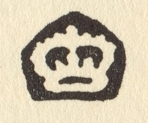
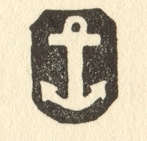
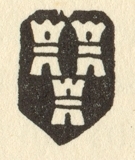
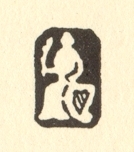
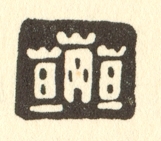
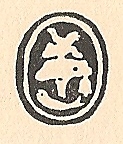
| BRITISH TOWN MARKS AND DATE LETTERS |




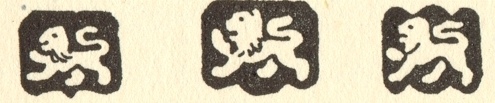
LION PASSANT
the first known use of this mark is dated to 1544, but only in 1720 the lion passant was enacted for all plate wrought in England. From this date
the lion passant appears on the marks of all town except those of Scotland and Ireland.
BRITANNIA MARK
in 1697an Act decreed a higher standard of purity for wrought plate instituting a new mark figure of Britannia and a lion's head erased. The higher standard
was in use from 1697 to 1720, but the use of Britannia standard is still permitted.
 |
 |
 |
DUTY MARK - KING'S HEAD
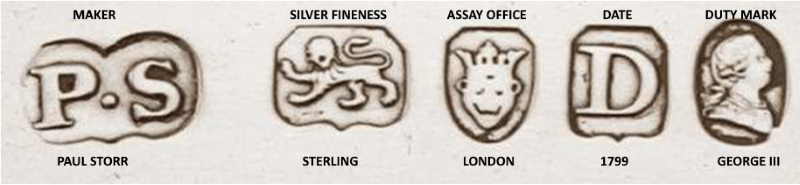
in 1784 a duty was imposed on all silver, and was ordained that the representation of the head of the sovereign should be stamped on all plate to show that it had paid the duty.
This was continued until 1890.
 |
MAKER'S MARK (SPONSOR'S MARK)
it consists of the initials of the Christian Name and surname of the silversmith (from 1697 to 1739 were used the first two letters of the maker's
surname).
 |
AN EXAMPLE OF BRITISH SILVER HALLMARKING SYSTEM
 |
| BRITISH SILVERSMITHS - ILLUSTRATED LISTING OF MAKER'S AND SPONSOR'S MARKS |
| A& | AA | AB | AC | AD | AE | AF | AG | AH | AI | AJ | AK | AL | AM | AN | AO | AP | AQ | AR | AS | AT | AU | AV | AW | AX | AY | AZ |
| B& | BA | BB | BC | BD | BE | BF | BG | BH | BI | BJ | BK | BL | BM | BN | BO | BP | BQ | BR | BS | BT | BU | BV | BW | BX | BY | BZ |
| C& | CA | CB | CC | CD | CE | CF | CG | CH | CI | CJ | CK | CL | CM | CN | CO | CP | CQ | CR | CS | CT | CU | CV | CW | CX | CY | CZ |
| D& | DA | DB | DC | DD | DE | DF | DG | DH | DI | DJ | DK | DL | DM | DN | DO | DP | DQ | DR | DS | DT | DU | DV | DW | DX | DY | DZ |
| E& | EA | EB | EC | ED | EE | EF | EG | EH | EI | EJ | EK | EL | EM | EN | EO | EP | EQ | ER | ES | ET | EU | EV | EW | EX | EY | EZ |
| F& | FA | FB | FC | FD | FE | FF | FG | FH | FI | FJ | FK | FL | FM | FN | FO | FP | FQ | FR | FS | FT | FU | FV | FW | FX | FY | FZ |
| G& | GA | GB | GC | GD | GE | GF | GG | GH | GI | GJ | GK | GL | GM | GN | GO | GP | GQ | GR | GS | GT | GU | GV | GW | GX | GY | GZ |
| H& | HA | HB | HC | HD | HE | HF | HG | HH | HI | HJ | HK | HL | HM | HN | HO | HP | HQ | HR | HS | HT | HU | HV | HW | HX | HY | HZ |
| I& | IA | IB | IC | ID | IE | IF | IG | IH | II | IJ | IK | IL | IM | IN | IO | IP | IQ | IR | IS | IT | IU | IV | IW | IX | IY | IZ |
| J& | JA | JB | JC | JD | JE | JF | JG | JH | JI | JJ | JK | JL | JM | JN | JO | JP | JQ | JR | JS | JT | JU | JV | JW | JX | JY | JZ |
| K& | KA | KB | KC | KD | KE | KF | KG | KH | KI | KJ | KK | KL | KM | KN | KO | KP | KQ | KR | KS | KT | KU | KV | KW | KX | KY | KZ |
UNDER CONSTRUCTION
| IMAGES |
A& AC |
AD AK |
AL AZ |
B& BB |
BC BO |
BP BZ |
C& CA |
CB CC |
CD CF |
CG CL |
CM CS |
CT CZ |
D& DB |
DC DL |
DM DZ |
E& EA |
EB ED |
EE EH |
EI EO |
EP EZ |
F& FD |
FE FJ |
FK FZ |
G& GB |
GC GG |
GH GL |
GM GR |
GS GZ |
| IMAGES |
H& H& |
HA HB |
HC HE |
HF HL |
HM HU |
HV HZ |
I& IG |
IH IL |
IM IZ |
J& JA |
JB JC |
JD JG |
JH JK |
JL JQ |
JR JR |
JS JS |
JT JZ |
KA KZ |
L& LB |
LC LZ |
M& MB |
MC MI |
MJ MZ |
N& NZ |
OA OZ |
P& PK |
PL PZ |
QA QZ |
| IMAGES |
R& RB |
RC RG |
RH RK |
RL RQ |
RR RZ |
S& SB |
SC SI |
SJ SR |
SS SZ |
T& TC |
TD TG |
TH TN |
TO TS |
TT TZ |
UA UZ |
V& VZ |
W& WA |
WB WB |
WC WC |
WD WE |
WF WG |
WH WL |
WM WM |
WN WR |
WS WS |
WT XZ |
YA YZ |
ZA ZZ |
 www.silvercollection.it |
|
This is a page of 'The What is? Silver Dictionary' of A Small Collection of
Antique Silver and Objects of vertu, a 1500 pages richly illustrated website offering all you need to know about
antique silver, sterling silver, silverplate, Sheffield plate, electroplate silver,
silverware, flatware, tea services and tea complements, marks and hallmarks, articles,
books, auction catalogs, famous silversmiths (Tiffany, Gorham, Jensen, Elkington),
history, oddities ... HOME - SITE MAP - SILVER DICTIONARY - COOKIES CONSENT AND PRIVACY |