HALLMARKS OF ENGLISH SILVER
MAKER'S MARK IDENTIFICATION - ILLUSTRATED LISTING
WITH THE ADDITION OF SCOTTISH, IRISH, CHANNEL ISLANDS AND COLONIES SILVERMITHS
|
This is a page of A Small Collection of Antique Silver and Objects of vertu, a 1500 pages richly illustrated website offering all you need to know about antique silver, sterling silver, silverplate, sheffield plate, electroplate silver, silverware, flatware, tea services and tea complements, marks and hallmarks, articles, books, auction catalogs, famous silversmiths (Tiffany, Gorham, Jensen, Elkington, WMF, Reed & Barton, Mappin & Webb, Bateman Family), history, oddities ...
SITE MAP -
HOME PAGE
|
BRITISH SILVERSMITHS
ILLUSTRATED LISTING OF SILVER MAKERS MARKS
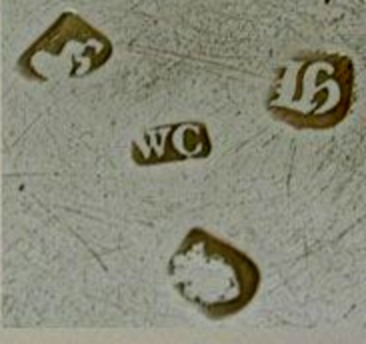
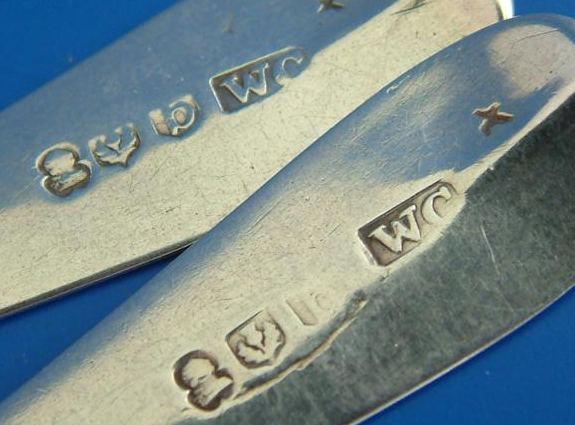
WC - WC |
| ALPHABETICAL LISTING OF MAKER'S MARKS |
| ALPHABETICAL LISTING OF SILVERSMITHS' NAMES |
(click on the photo to enlarge image)
 |
|
 |
|
 |
|
 |
|
 |
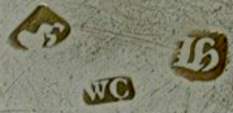
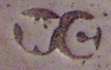
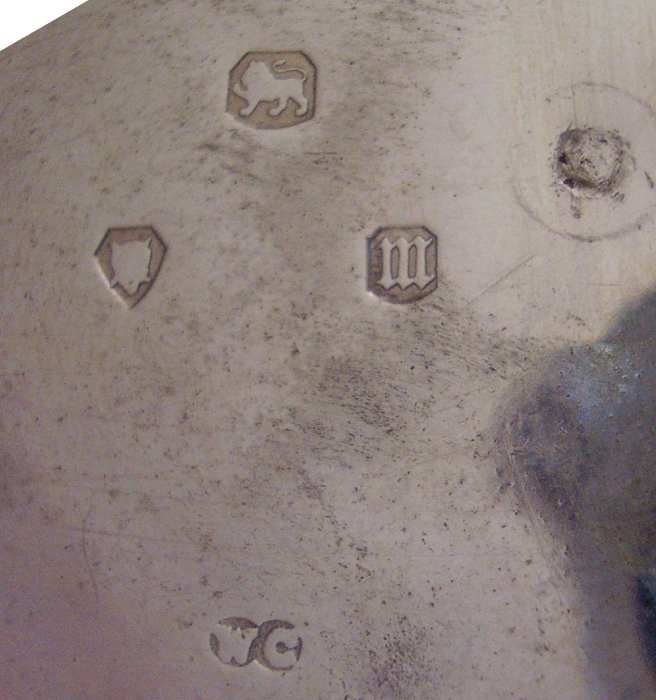
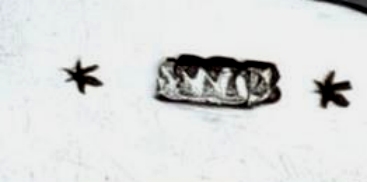
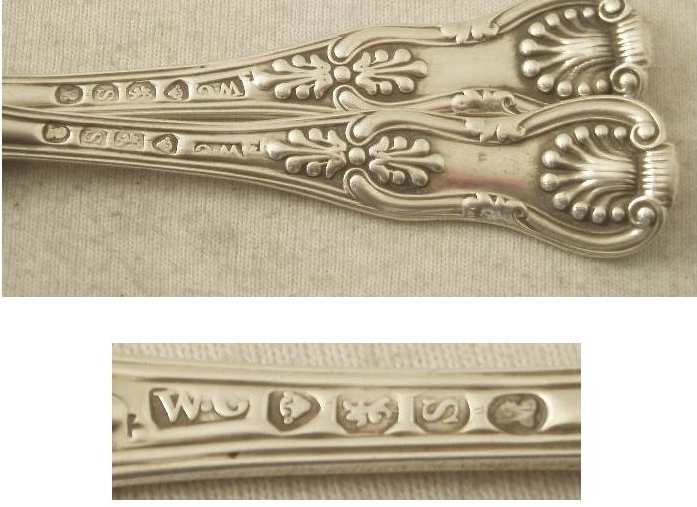
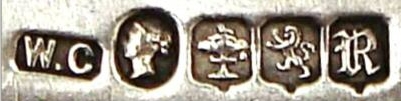
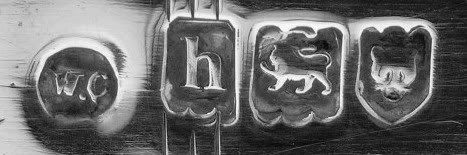
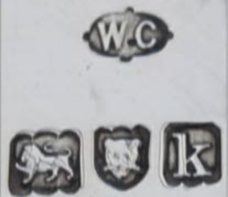
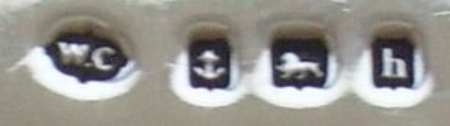
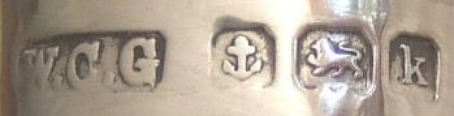
WC into two circles
William Carter (possibly),
listed in 1852 as a watch case maker at 7 President Street East, Goswell Road, Clerkenwell, EC. This address was subsequently
changed to 35 President Street, EC where Carter is still listed in 1885. A William Carter, possibly the same individual, is listed in 1841 as a
watch case maker at 22 Galway Street, Bath Street, St. Luke's.
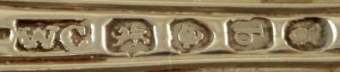
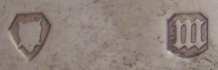
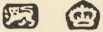
London 1867 hallmark |
|
BRITISH TOWN MARKS AND DATE LETTERS
|
MORE on the tutorial:
HOW TO READ ENGLISH/BRITISH STERLING SILVER MARKS
The hallmarking of British silver is based on a combination of marks that makes possible the
identification of the origin and the age of each silver piece manufactured or traded in the UK. The marks are:
Town mark, corresponding to the mark of the Assay Office that has verified the piece
Lion passant guardant or Britannia or lion's head erased, certifiying the silver quality
Maker's mark, identifying the silversmith presenting the piece to the assay office (usually the initials of Christian name and surname of the silversmith)
Date letter, in cycles of twenty letters of the alphabet of different shape identifies the year in which the piece was verified by the Assay Office
A further mark was used in the period 1784 - 1890:
Sovereign head ('duty mark'), certifying the payment of the duty
This page was useful? leave your LIKE on
facebook
work in progress on this page - your help, corrections and suggestions will be greatly appreciated -
|





 London
 Birmingham
 Dublin
 Edinburgh
 Glasgow
 Sheffield
 Chester